How Long Does Chimney Cleaning Take?
Chimney cleaning usually takes 45 minutes to 2 hours depending on buildup, access, and chimney size. Learn what affects timing and when inspections add more time.




Based on 500+ Reviews

Proudly American
Owned & Operated

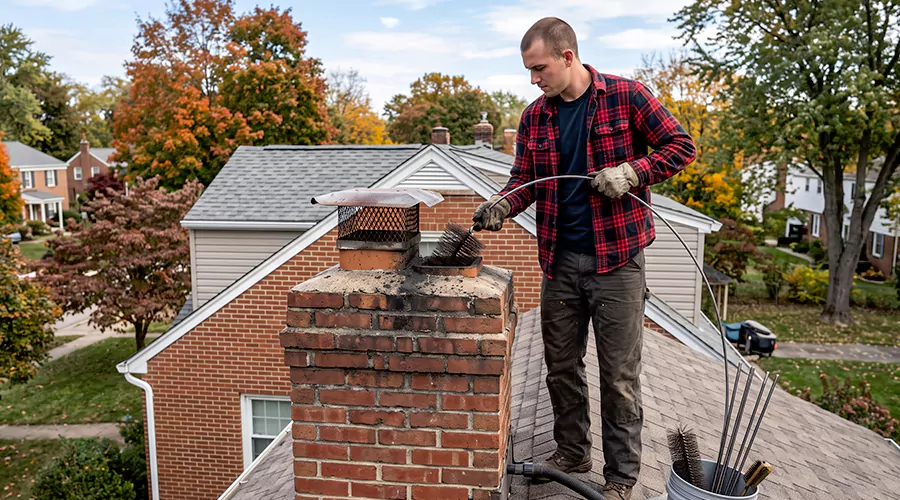
Chimney cleaning usually takes between 45 minutes and 2 hours, depending on the size of the chimney, amount of buildup, accessibility, and whether additional issues are discovered during the cleaning process. A chimney with light soot buildup and easy access may be cleaned relatively quickly, while a chimney with heavy creosote deposits, blockages, or multiple flues may require additional time.
Understanding what affects chimney cleaning time can help homeowners know what to expect during the process.
Not every chimney requires the same amount of work. The cleaning time depends on several factors, including:
A regularly maintained chimney usually takes less time to clean than one that has accumulated years of buildup.
The typical time required for chimney cleaning depends on the condition of the system.
| Chimney Condition | Average Cleaning Time |
|---|---|
| Light buildup | 45 minutes to 1 hour |
| Regular maintenance cleaning | 1 to 1.5 hours |
| Heavy creosote buildup | 2 hours or more |
| Multiple flues or fireplaces | Additional time required |
| Cleaning with inspection | Longer depending on inspection level |
These times can vary depending on the complexity of the chimney system.
A chimney cleaning involves several steps, and each step contributes to the total time required.
Before cleaning begins, the chimney is usually evaluated.
The cleaning process may start with checking:
This helps determine the best cleaning approach.
Before cleaning the chimney, the surrounding area is protected.
Preparation may include:
This step helps prevent soot and debris from spreading throughout the home.
The main part of chimney cleaning involves removing deposits from inside the flue.
Specialized tools are used to remove:
The amount of buildup directly affects how long this step takes. A chimney with a thin layer of soot may require minimal cleaning, while thick deposits require more time and effort.
Some chimneys contain materials that restrict airflow.
Possible debris includes:
Removing blockages can add additional time depending on the location and amount of debris.
After the chimney is cleaned, remaining debris is removed from the fireplace.
This may include:
The cleanup process helps leave the fireplace area ready for future use.
One of the biggest factors affecting cleaning time is the amount of creosote inside the chimney.
Creosote may develop in different forms:
| Creosote Type | Cleaning Difficulty |
|---|---|
| Light soot-like coating | Easier to remove |
| Flaky deposits | Moderate cleaning required |
| Hard glazed creosote | More difficult removal |
Hard deposits often require additional cleaning methods and more time.
Larger chimneys generally take longer to clean.
Factors include:
A simple single-flue chimney usually takes less time than a large multi-flue system.
Homes with multiple fireplaces require more cleaning time because each chimney system must be evaluated and serviced.
Additional fireplaces may increase:
Accessibility can affect the cleaning process.
Challenges may include:
More difficult access may require additional preparation and safety measures.
If chimney inspection is performed along with cleaning, the total appointment may take longer.
| Service | Approximate Time |
|---|---|
| Basic cleaning | 45 minutes to 2 hours |
| Cleaning plus basic inspection | 1 to 3 hours |
| Cleaning plus detailed camera inspection | Longer depending on findings |
A detailed inspection may involve examining the flue interior, checking chimney components, and documenting any problems.
Yes. A chimney that has not been cleaned regularly may require more time.
Long periods without maintenance can lead to:
Regular maintenance usually makes future cleanings faster and easier.
In many cases, yes. A standard chimney cleaning can often be completed during one appointment.
However, additional work may be needed if the cleaning reveals:
Cleaning removes deposits but does not repair damaged chimney components.
Preparing before the appointment can help reduce unnecessary delays.
Before cleaning:
A prepared work area helps the cleaning process move more efficiently.
Cleaning frequency depends on:
Wood-burning fireplaces often require more frequent cleaning because they produce soot and creosote.
A chimney should also be cleaned when:
If cleaning takes longer than expected, it is usually because additional buildup or problems were discovered.
Possible reasons include:
A longer cleaning time does not always indicate a serious problem, but unexpected findings should be evaluated.
Chimney cleaning usually takes between 45 minutes and 2 hours, depending on chimney size, buildup level, accessibility, and whether additional services are needed. A regularly maintained chimney with light deposits can often be cleaned quickly, while a chimney with heavy creosote, blockages, or multiple flues may require more time.
Regular cleaning helps remove soot, creosote, and debris while supporting better fireplace performance. Scheduling routine maintenance can also make future chimney cleanings faster and help identify potential problems early.
A normal chimney cleaning usually takes about 45 minutes to 2 hours.
Cleaning may take longer because of heavy creosote buildup, debris, difficult access, or a larger chimney system.
Yes. A detailed inspection, especially with camera equipment, can increase the total appointment time.
A neglected chimney may take longer because it can contain heavier deposits, debris, or blockages.
Yes. Most standard chimney cleaning services are completed during a single appointment.
No. Cleaning removes buildup, but issues such as cracks, leaks, or damaged liners require separate repairs.
Chimney cleaning usually takes 45 minutes to 2 hours depending on buildup, access, and chimney size. Learn what affects timing and when inspections add more time.
